Numbers & percentages
Fractions, decimals, percentage calculations, conversions, multiplying and dividing by powers of ten — including calculating prices, discounts, margins and how money is shared.
Six weeks of practical maths and business skills — designed around everyday life, work and opportunity in Madagascar.
Mathagascar is a free, six-week programme for teenagers aged 14–18. We teach essential maths alongside business and financial skills, using familiar situations from Nosy Be. Students learn through short explanations, questions, hands-on exercises, teamwork and games — not just by listening.
Understand a new idea through examples and visual demonstrations.
Solve questions, use whiteboards and ask for individual help.
Use the maths to tackle practical challenges from everyday life.
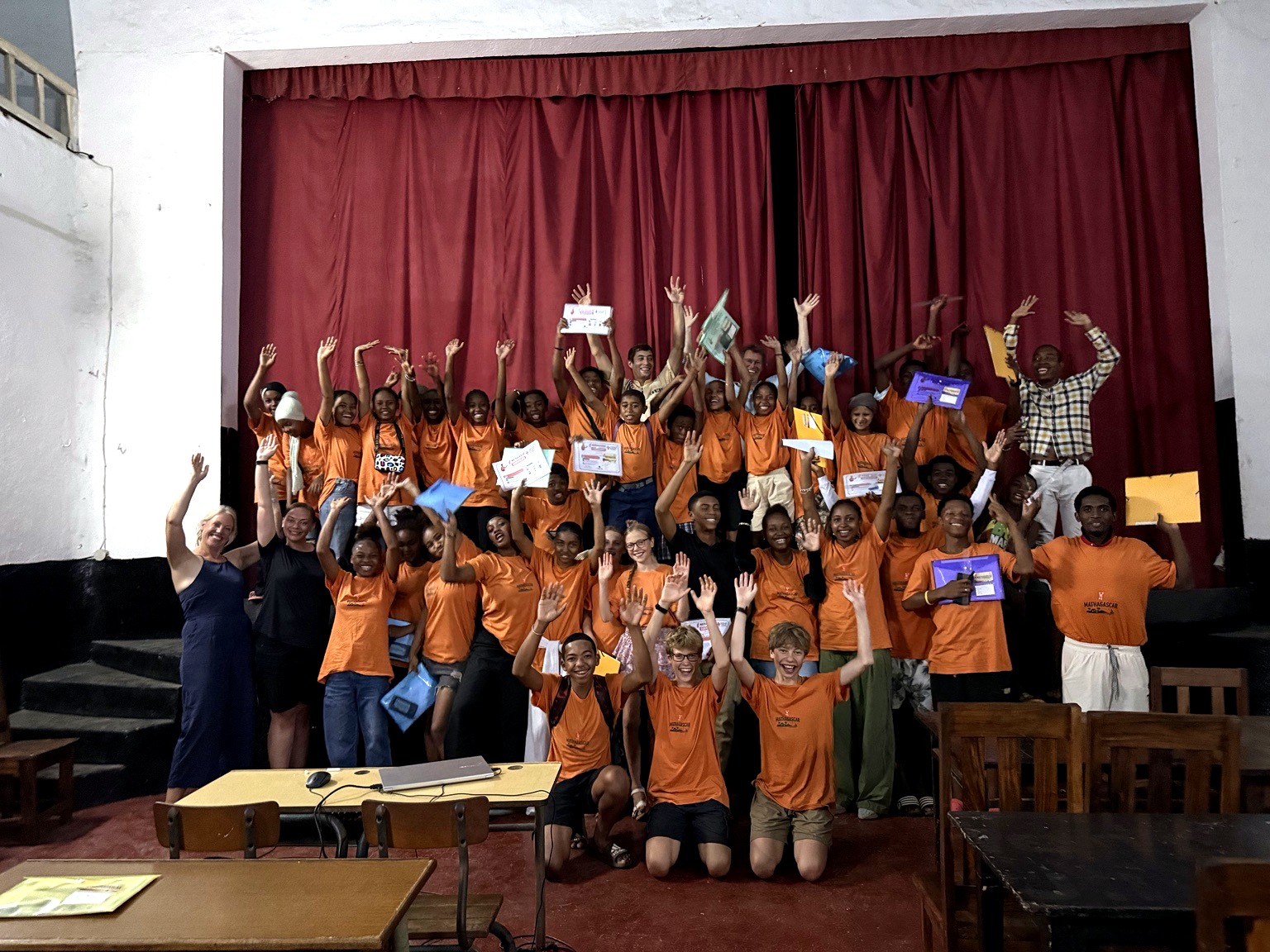
Review progress, tackle assessments and celebrate with certificates.
The course progresses from the building blocks of numeracy to the calculations used in business, construction, transport and personal finance. Throughout the programme, students are encouraged to think like young entrepreneurs: spotting opportunities, understanding costs, making decisions and seeing how maths can help turn an idea into income.
Fractions, decimals, percentage calculations, conversions, multiplying and dividing by powers of ten — including calculating prices, discounts, margins and how money is shared.

Metric units, length, weight, capacity, perimeter, area, triangles, circles, surface area and volume. From measuring land to estimating walls, stock, packaging and building materials.
Working with the clock, journey times and speed–distance–time calculations, using walking, tuk-tuk, taxi-brousse and air-travel examples that matter for work, deliveries and daily travel.
Mixing drinks, dividing money, comparing quantities and scaling recipes — useful for cooking, trading, production and working out the right deal.

Revenue, costs, profit, pricing, savings, loans and interest. Students estimate what a market stall or pizza restaurant might earn — and how an entrepreneur decides whether a business idea can work.
Square and cube numbers, powers, square roots, compound interest and arithmetic versus exponential growth — applied to savings, borrowing and business growth decisions.
We want students to leave with more than better test scores. The programme is designed to help them become more confident, resourceful and entrepreneurial — able to use maths to plan, trade, price, save, borrow and make better decisions.
Students work through challenges rooted in life on Nosy Be: buying vanilla by weight, calculating tuk-tuk journeys, estimating land and fencing costs, planning a restaurant’s finances and assessing loans to start a small business.
The aim is not simply to get the right answer, but to recognise when maths is useful, to see how it supports entrepreneurship, and to have the confidence to use it in real decisions.
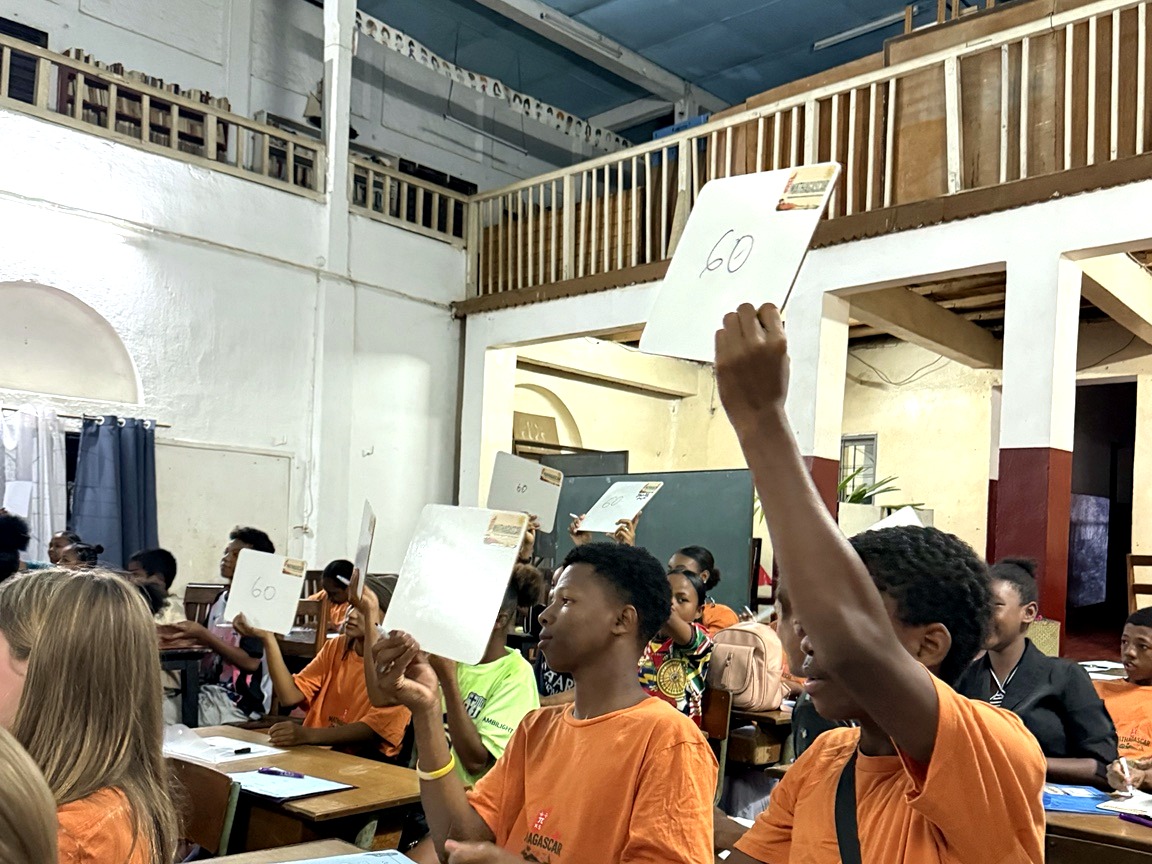
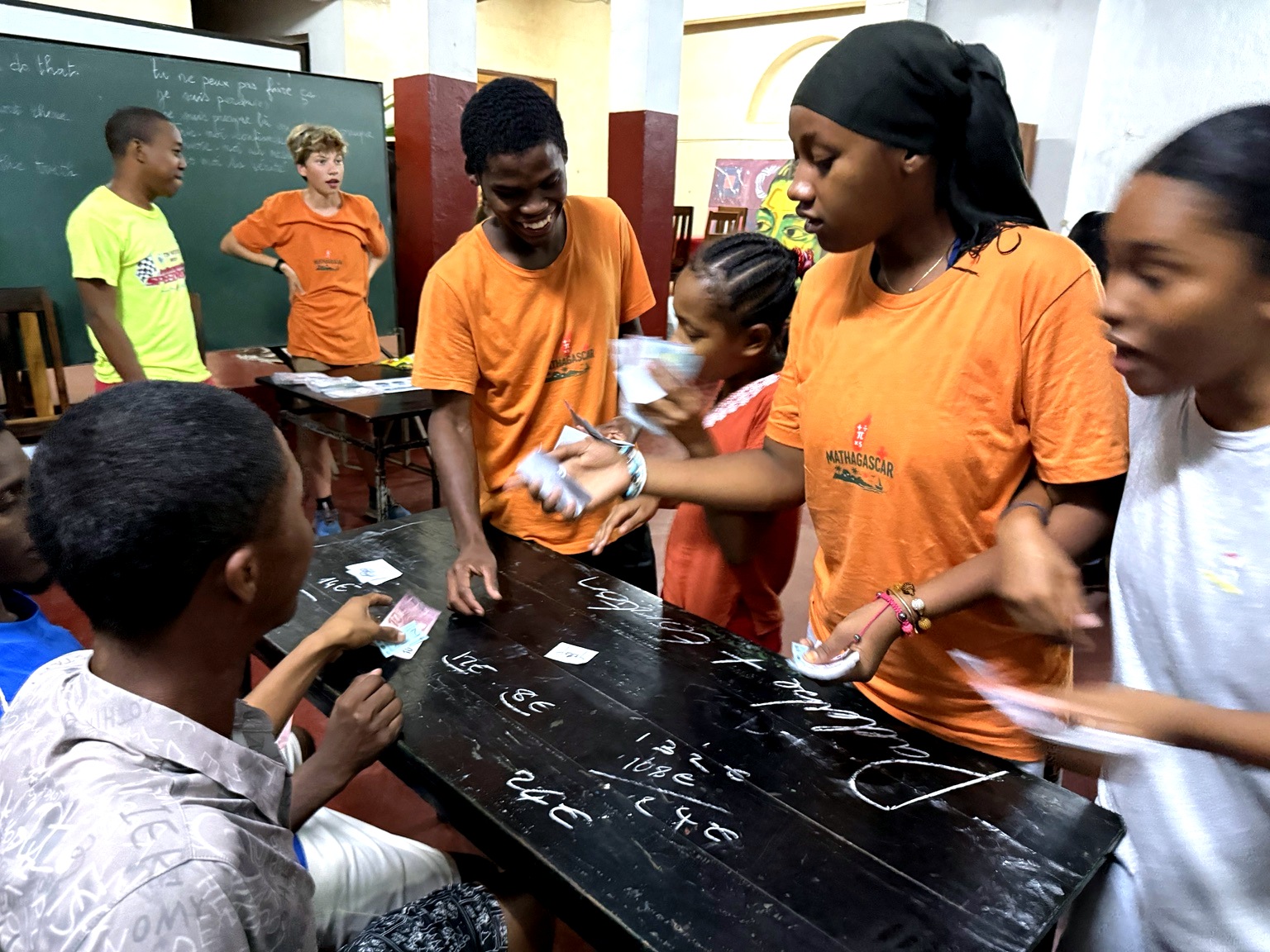
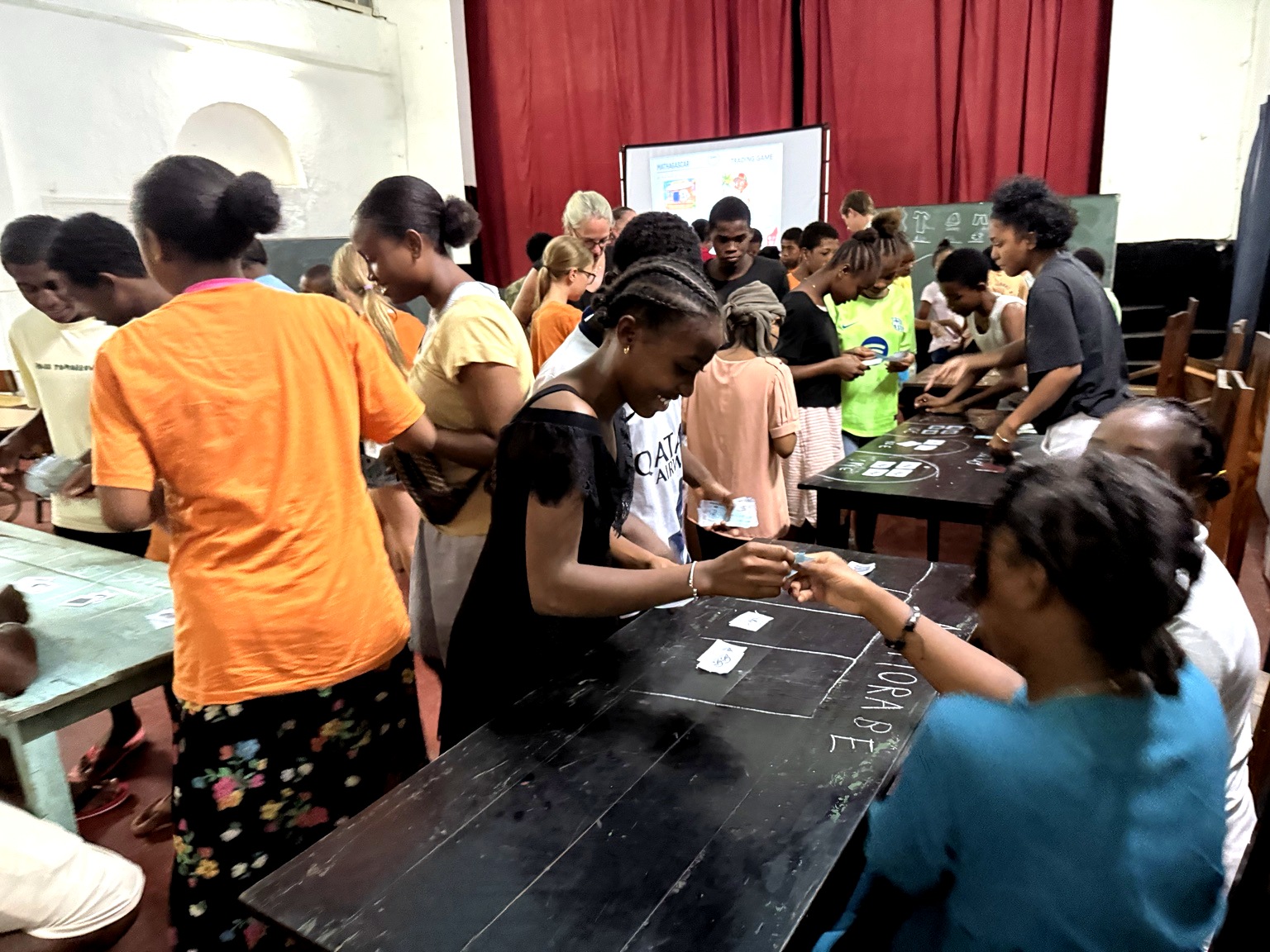
In one of the course’s most popular activities, pairs of students run their own shops. They borrow money, buy clothing at wholesale prices, set selling prices and negotiate with customers.
Shopkeepers try to make a profit, while customers try to buy everything on their shopping list for the lowest price. A later round adds interest on borrowing — and a new financial challenge.
It’s a lively way to experience pricing, competition, budgeting, negotiation and business profit — and to start thinking like an entrepreneur.
The class’s average score rose from 25% at the start of the programme to 75% at the end — using questions of the same type and difficulty.
The first course was delivered in Hell-Ville in summer 2026 to a group of 35 teenagers. Students also celebrated their progress with end-of-course certificates.